
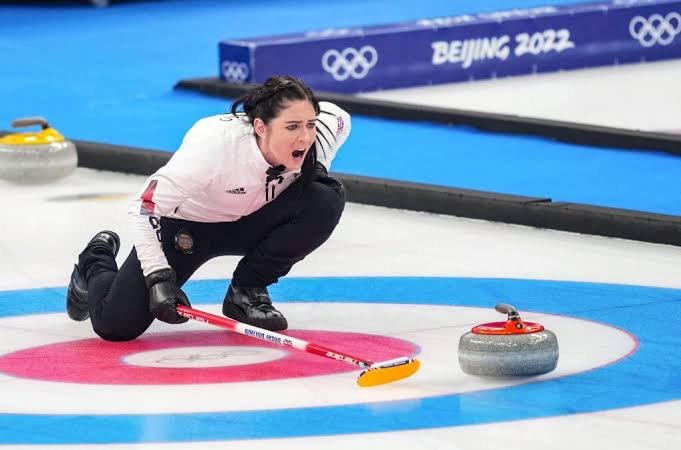

The Mechanics of Curling Stones
Understanding the mechanics of curling stones is crucial to grasping how do brushes affect the stone’s path in Olympic curling. The movement of a curling stone involves several physical principles including rotation, friction, and the specific materials utilized in the construction of the stones. Each curled shot begins with the delivery of the stone, which incorporates a calculated amount of rotational spin. This spin not only determines the stone’s speed but also its trajectory on the ice.
As the stone travels across the ice, it encounters resistance due to friction. The surface of the curling ice is meticulously prepared to promote a certain level of friction that can, in conjunction with the stone’s rotation, cause the stone to curl. The degree of this curling action, or its path, is largely affected by how the stone interacts with the ice. This interaction can modify depending on the rock’s speed, the angle at which it is delivered, and indeed, whether brushes are applied during its movement.
The materials used to construct curling stones also play a pivotal role in determining their behavior on the ice. Traditionally, curling stones are made from specific types of granite, which provides the necessary density and durability. The precision in manufacturing ensures that each stone maintains a consistent shape and weight. Tiny variations in their surface depending on prior games or usage may slightly affect how do brushes impact the stone’s path. As the brushes make contact with the ice, they alter surface conditions, reducing friction and producing a smoother path for the stone, thereby modifying its trajectory. This intricate relationship showcases the exceptional balance of physics and technique involved in curling.
Understanding Brush Techniques in Curling
In the sport of curling, brush techniques play a pivotal role in influencing the stone’s trajectory on the ice. Curlers utilize a variety of brushing methods to control the distance and direction the stone travels, which significantly affects the outcome of a match. Two primary levels of brushing focus on are light brushing and aggressive brushing, each serving unique purposes during gameplay.
Light brushing is often employed when a stone is already on its target path. The technique is characterized by a gentle touch, aiming primarily to reduce friction on the ice. This type of brushing can help the stone travel a bit farther without altering its original line. Conversely, aggressive brushing involves applying more pressure and speed, producing a substantial impact on both the distance and path of the stone. This method is particularly vital when a change in trajectory is needed to navigate around opposing stones or to reach the desired position in the house.
The tools utilized for brushing include high-quality brushes designed with materials that enhance energy transfer onto the stone. These brushes often feature a plastic or a fabric head combined with a lightweight handle, allowing curlers to maximize their efficiency and control over the stone. Mastering the various brushing techniques requires substantial skill and practice, underscoring its importance as part of a curler’s training regimen.
Furthermore, effective brush techniques are integral to the overall strategy of a curling match. Teams must communicate efficiently to coordinate their brushing efforts, ensuring they enhance the stone’s path as intended. As such, understanding how do brushes affect the stone’s path in Olympic curling extends beyond mere execution; it involves an in-depth awareness of game strategy and team dynamics.
The Scientific Evidence: Studies and Findings
The impact of brush techniques on the trajectory of the curling stone has been extensively examined in various research studies, offering compelling insights into how do brushes affect the stone’s path in Olympic curling. One notable study published in the Journal of Sports Science explored the relationship between brushing and stone speed, revealing that effective brush strokes could increase the stone’s speed by as much as 20%. The key to this effect lies in the ability of brushes to reduce friction between the stone and the ice, thereby enhancing its glide and accuracy.
In addition to laboratory findings, quantitative experiments conducted on the curling rink have validated these claims. A series of field tests demonstrated that skilled brushers have the potential to influence not only the stone’s speed but also its curl, which is crucial for strategic placement. According to data collected during competitive matches, teams that utilized synchronized brushing strategies were found to achieve a 15% higher stone accuracy rate compared to those who did not support their throws adequately with brushing.
Furthermore, endorsements from professional curlers underscore the practical implications of these studies. Olympians and seasoned coaches alike consistently emphasize the importance of brushing in influencing the stone’s path. For instance, many have noted that specific brushing techniques can significantly affect the stone’s trajectory when it comes to competing under the high-stakes environment of the Olympic Games. This consensus among experts highlights the role of trained brushers in optimizing team performance, effectively demonstrating how do brushes affect the stone’s path in Olympic curling.
Practical Application in Competition
The strategic significance of brush techniques in Olympic curling is evidenced in numerous high-stakes matches. The effectiveness of how do brushes affect the stone’s path in Olympic curling becomes particularly pronounced under competitive conditions where precision is paramount. For instance, during the 2018 Winter Olympics, a notable example was demonstrated by the Canadian women’s team, who skillfully utilized brushing techniques to navigate a complex ice surface while executing their shots. Their adept use of brushes allowed them to alter the stone’s trajectory, maximizing their scoring opportunities through careful adjustments based on ice conditions.
The influence of brushing extends beyond mere adjustments; it plays a pivotal role in the overall strategy. Consider the final match of the men’s curling event in the same Olympics. The Swedish team employed a systematic approach by analyzing and adjusting their brushing pressure based on their opponents’ delivery strength. This method not only ensured that the stone would travel the desired distance but also provided enhanced control over its curl, demonstrating how do brushes affect the stone’s path in Olympic curling in a team-oriented dynamic. This illustrates that mastering brush techniques is not just an individual skill but a collective strategy that can shift the momentum of a match.
In another compelling instance, during a World Curling Championship, the use of advanced brushing techniques allowed teams to maintain precision while addressing challenging ice conditions. The interplay between the skip’s call, the throw, and the subsequent brushing elevated the significance of coordination among team members. Effective communication regarding brush pressure and timing is critical to achieving desired pathways for the stones, showcasing just how vital brushing becomes in clinching victories in competitive scenarios.
In conclusion, it is evident that the practical application of brush techniques in Olympic curling significantly influences the stones’ paths, underscoring the necessity for teams to refine these skills for enhanced competitive performance.